

Benefits of Team-Based Games for Workplace Success
February 4, 2026

Pressure to keep global teams connected and driven can make traditional team-building feel outdated and ineffective. Many HR managers search for solutions that go beyond temporary morale boosts and create lasting improvements in how employees communicate and work together. Incorporating collaborative team-based games allows companies to simulate real work scenarios, strengthen trust, and develop practical skills in a safe, engaging environment, setting the stage for sustained team performance and stronger organizational culture.
Table of Contents
- Defining Team-Based Games In The Workplace
- Key Variations And Popular Game Formats
- Core Benefits For Team Engagement And Productivity
- Essential Features For Effective Corporate Play
- Common Pitfalls And Maximizing Positive Impact
Key Takeaways
| Point | Details |
|---|---|
| Team-Based Games Enhance Skills | These games foster communication, problem-solving, and decision-making skills in a safe environment. |
| Variety of Game Formats | Different formats like icebreakers and problem-solving challenges target specific skill development and team dynamics. |
| Strategic Design is Crucial | Games must align with organizational goals, engage all participants, and promote a safe learning space. |
| Avoid Common Pitfalls | Ensuring appropriate exercise selection and participant involvement is vital for meaningful team development. |
Defining Team-Based Games in the Workplace
Team-based games in the workplace represent strategic, collaborative activities designed to enhance organizational performance through interactive challenges. These structured experiences go far beyond simple entertainment, serving as powerful tools for developing critical workplace skills and improving team dynamics. By simulating real work environments, these games create opportunities for employees to practice communication, problem-solving, and collective decision-making in controlled yet engaging settings.
At their core, team-based games involve participants assuming specific roles and working together to achieve shared objectives. These activities are carefully crafted to mirror actual workplace challenges, allowing teams to develop essential interpersonal skills while maintaining an enjoyable atmosphere. Key characteristics of effective workplace team games include:
- Structured collaborative scenarios
- Clear team-based objectives
- Role-specific challenges
- Opportunities for strategic interaction
- Immediate feedback mechanisms
- Low-risk learning environments
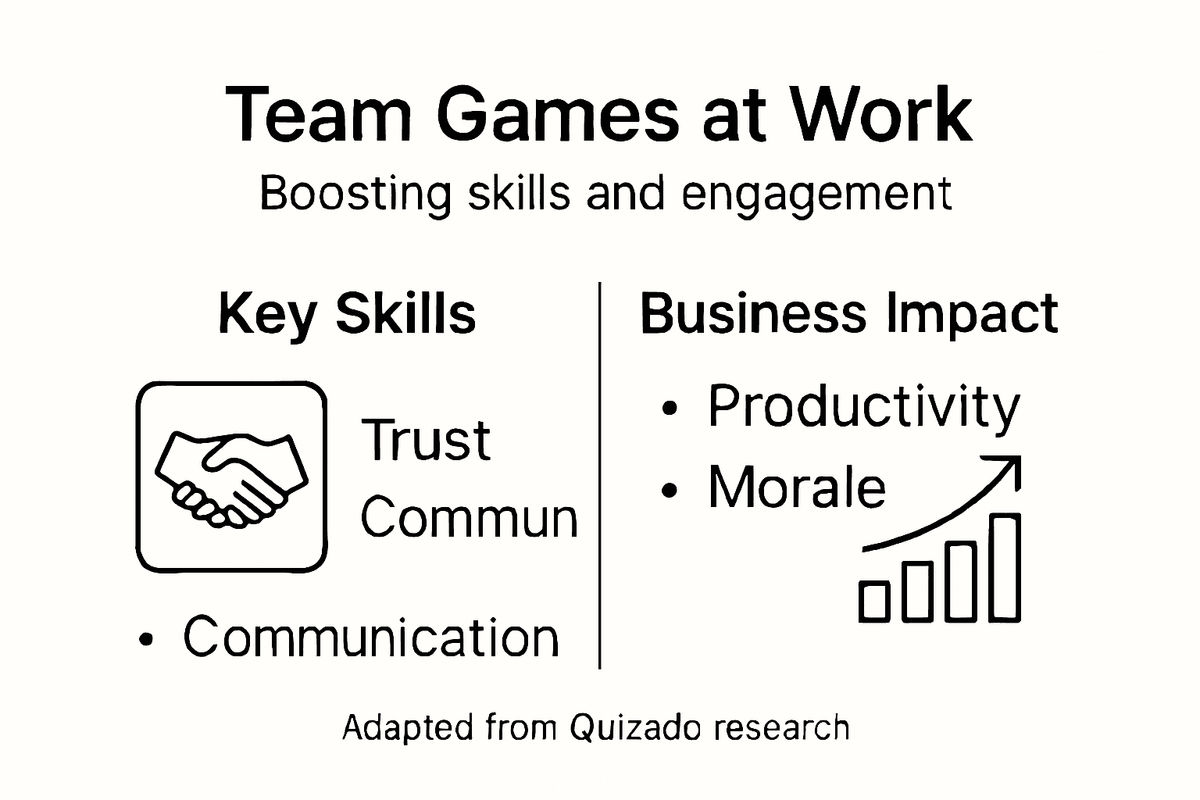
Research indicates that these games activate critical team dynamics mechanisms such as trust building and mutual awareness. By creating scenarios that require collective problem-solving, organizations can systematically improve team cohesion and adaptability. Digital multiplayer cooperative games have emerged as particularly effective tools for enhancing team performance, allowing participants to practice complex interactions in immersive, risk-free settings.
Pro tip: Design team-based games that directly reflect your organization's actual work challenges to maximize skill transfer and engagement.
Key Variations and Popular Game Formats
Workplace team-based games encompass a diverse range of interactive formats designed to develop critical organizational skills. Team building games represent strategic approaches that transform traditional learning into engaging, participatory experiences. These activities are meticulously crafted to address specific workplace development needs while maintaining an atmosphere of enjoyment and collaborative interaction.
Different game formats target unique skill development objectives. Popular variations include:
- Icebreakers: Short activities promoting initial team connection
- Problem-solving challenges: Complex scenarios requiring collective strategic thinking
- Communication games: Exercises focused on improving interpersonal dialogue
- Leadership simulation games: Role-based scenarios testing management capabilities
- Virtual team challenges: Digital platforms enabling remote team engagement
- Competitive team quizzes: Knowledge-testing activities with interactive elements
These game formats serve multiple organizational purposes, from enhancing communication skills to building trust and improving collective problem-solving capabilities. By introducing structured yet dynamic challenges, companies can create low-risk environments where employees develop critical workplace competencies. The strategic design of these games allows participants to practice complex interactions, learn from immediate feedback, and grow their collaborative potential.
The table below compares key team-based game formats by their core focus and primary outcomes:
| Game Format | Core Skill Focus | Typical Business Outcome |
|---|---|---|
| Icebreakers | Initial team connection | Faster onboarding, rapport |
| Problem-solving challenges | Collaborative strategy | Stronger critical thinking |
| Communication games | Dialogue improvement | Fewer misunderstandings |
| Leadership simulations | Role-based leadership | Improved management pipeline |
| Virtual team challenges | Digital collaboration | Enhanced remote engagement |
| Competitive team quizzes | Knowledge demonstration | Greater team motivation |
Pro tip: Select team game formats that directly align with your organization's specific skill development goals and current team dynamics.
Core Benefits for Team Engagement and Productivity
Team-based games have emerged as powerful tools for enhancing workplace dynamics and organizational performance. Computer-based learning games facilitate critical skill development by creating immersive environments that promote self-reflection, collaborative learning, and strategic team interactions. These interactive experiences go beyond traditional training methods, transforming how teams communicate, problem-solve, and achieve collective goals.
The core benefits of team-based games for workplace engagement and productivity include:
- Enhanced Communication: Breaking down communication barriers
- Improved Problem-Solving: Developing collective strategic thinking
- Trust Building: Creating safe environments for vulnerability
- Skill Development: Practicing real-world workplace scenarios
- Performance Motivation: Encouraging healthy team competition
- Role Understanding: Clarifying individual and team responsibilities
Interactive team challenges create powerful learning opportunities by simulating complex workplace scenarios. Real-time collaborative activities encourage teams to leverage individual strengths, communicate effectively, and develop critical thinking skills in low-risk, engaging environments. By introducing structured yet dynamic challenges, organizations can systematically improve team cohesion, trust, and overall productivity.

Pro tip: Design team-based games that directly mirror your organization's specific challenges to maximize skill transfer and engagement.
Essential Features for Effective Corporate Play
Successful corporate team-based games require strategic design and thoughtful implementation. Corporate team-building activities must be carefully crafted to align with organizational goals and create meaningful learning experiences. These interactive challenges go beyond simple entertainment, serving as powerful tools for developing critical workplace skills and fostering a collaborative organizational culture.
Key essential features for effective corporate play include:
- Clear Organizational Objectives: Directly connecting game activities to specific workplace goals
- Full Participant Engagement: Designing activities that encourage active involvement from all team members
- Adaptive Complexity: Creating challenges that adjust to different team skill levels
- Inclusive Environment: Ensuring activities support diverse learning styles and team dynamics
- Performance Reflection: Incorporating mechanisms for immediate feedback and skill assessment
- Safe Learning Space: Developing low-risk scenarios for skill experimentation
Continuous information sharing remains crucial in designing effective team-based games. Successful corporate play requires creating environments that promote cooperative problem-solving, encourage critical self-assessment, and provide tangible connections between game experiences and real-world workplace challenges. By integrating these strategic elements, organizations can transform traditional team-building activities into powerful learning and development opportunities.
Pro tip: Regularly evaluate and adjust team game designs to ensure they remain relevant and aligned with evolving organizational needs.
Common Pitfalls and Maximizing Positive Impact
Team-building exercises require careful planning and strategic implementation to avoid common organizational challenges. While these activities promise significant benefits, organizations frequently encounter obstacles that can undermine their effectiveness. Understanding these potential pitfalls is crucial for designing meaningful, transformative team experiences that genuinely enhance workplace dynamics.
Common challenges in team-based games include:
- Poor Exercise Selection: Activities misaligned with organizational goals
- Lack of Participant Engagement: Designs that fail to capture team interest
- Excessive Competition: Strategies that create unhealthy workplace tension
- Insufficient Follow-Through: No clear connection between game experiences and workplace performance
- Unequal Participation: Designs that marginalize certain team members
- Superficial Learning: Games without meaningful skill development mechanisms
Workplace gamification strategies must balance intrinsic motivation with strategic objectives. Successful implementations focus on creating supportive environments that encourage collaboration, skill development, and genuine team growth. By carefully designing experiences that respect individual differences and organizational culture, companies can transform potential pitfalls into opportunities for meaningful team development.
Here is a summary of common pitfalls in team-based games alongside strategies to overcome them:
| Common Pitfall | Potential Impact | Mitigation Strategy |
|---|---|---|
| Poor exercise selection | Wasted time, low skill transfer | Align games with real work scenarios |
| Unequal participation | Team disengagement, resentment | Rotate roles and teams regularly |
| Excessive competition | Hurt morale, workplace tension | Focus on collaborative achievements |
| Superficial learning | Minimal skill improvement | Incorporate meaningful feedback |
Pro tip: Conduct thorough participant feedback and pre-game assessments to customize team-based games for maximum relevance and engagement.
Elevate Your Team Success with Customizable Team-Based Games
The article highlights how team-based games help overcome communication barriers, build trust, and boost problem-solving skills through engaging, collaborative challenges. If your organization struggles with low team engagement or wants to strengthen collaboration in a fun, low-risk environment, leveraging interactive games tailored to your real workplace scenarios is key. Quizado.com offers exactly that with customizable quiz experiences inspired by popular game shows, designed to foster team cohesion while sharpening critical workplace skills.
Key benefits include:
- Personalized team configurations matching your company dynamics
- Themed visual interfaces that keep participants motivated
- Remote play options to engage hybrid or distributed teams

Discover how you can transform your team-building efforts into impactful, memorable experiences with Quizado.com. Visit Quizado today to explore downloadable software compatible with macOS, Windows, and Linux. Bring your own questions, branding, and creativity to life with tools made for serious fun. Empower your managers and teams to connect, communicate, and collaborate like never before. Don’t wait to build a stronger, more unified workplace—start creating your customized team games now at Quizado.
Explore how team engagement is revolutionized through interactive gameplay by checking out our platform at Quizado.
Frequently Asked Questions
What are the main benefits of team-based games for workplace success?
Team-based games enhance communication, improve problem-solving skills, build trust, develop workplace competencies, motivate performance, and clarify roles within a team.
How can I choose the right team-based game for my organization?
Select games that align with your organization's specific skill development goals and current team dynamics. Assess the core skills you want to improve and design activities that address those needs.
Can team-based games really improve productivity?
Yes, team-based games create engaging environments that promote collaborative learning and effective communication, leading to improved team cohesion and productivity over time.
What common pitfalls should I avoid when implementing team-based games?
Avoid poor exercise selection, lack of participant engagement, excessive competition, and superficial learning. Focus on aligning games with real work scenarios and encourage constructive feedback.
